
The short answer
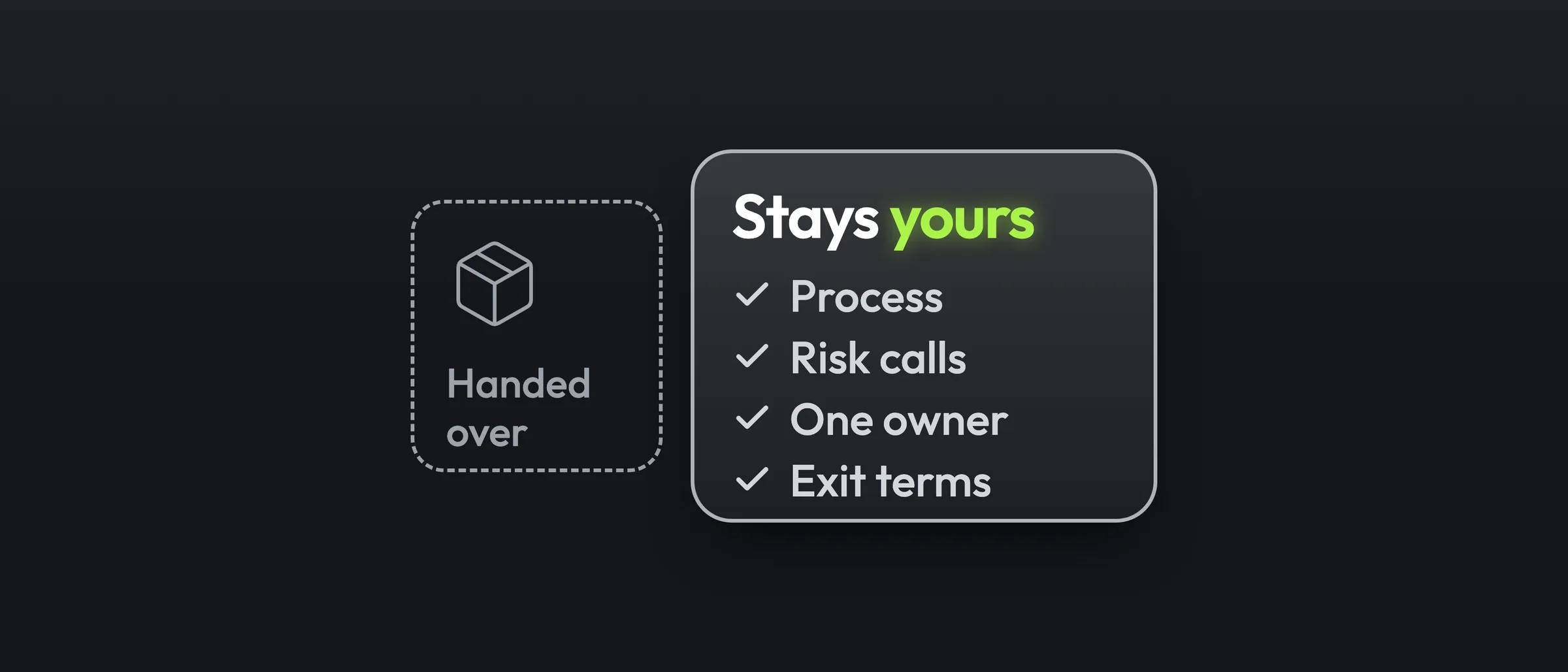
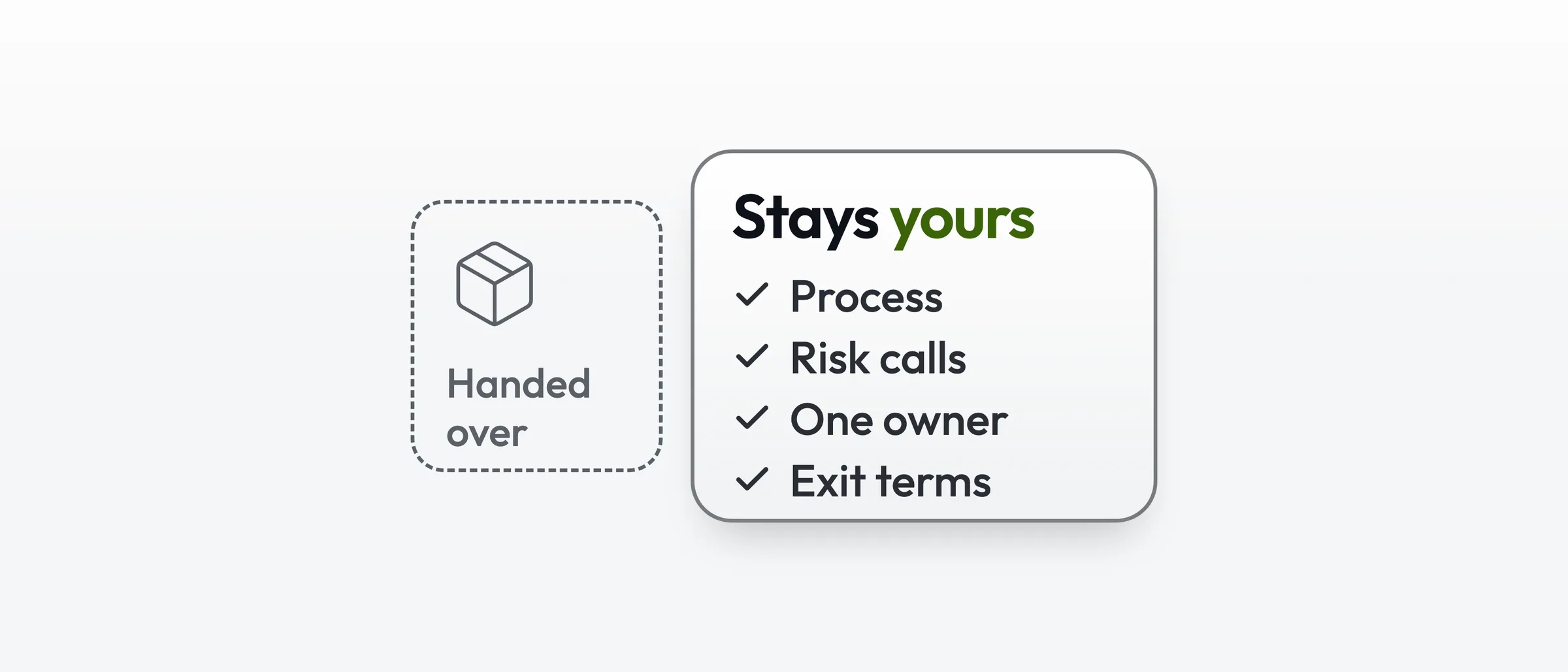
Done-for-you AI means the provider maps, builds, tests and hands over the system, including documentation and monitoring. What stays with you is the process knowledge, the decisions about what AI must not do, one internal owner, and agreed exit terms for the build. Handing over all four is what makes a build fail.
Done-for-you is an appealing phrase because it suggests the problem leaves the building. Most of it does. The parts that cannot leave are worth naming at the start, because they are where these projects quietly come apart 6 months in, long after everybody has agreed the build was a success.
What the supplier genuinely takes on
Mapping the workflow as it actually runs, which normally means finding the 3 steps nobody wrote down. Choosing the tools, building the integrations, writing the logic. Testing against your real process rather than a clean example, which is a slower exercise than it sounds and the one most often skipped.
Then documentation, a recorded walkthrough, and Managed AI Operations from go-live, which monitors, maintains and supports the system while live use surfaces the cases the mapping missed.
That is a genuine hand-off. Nobody on your side needs to write a line of code or understand how an integration authenticates. What actually gets built is a system built around the tools you already use.
What has to stay with you
Four things, and no supplier can take them however the contract is worded.
The process knowledge is the first. You know why the exception exists and why that particular client is handled differently, and that never transfers completely, which is why the documentation matters more than people expect.
The risk decisions are the second. What software must not decide on its own is a business judgement rather than a technical one, and a supplier who makes it on your behalf has made it wrong.
The third is one internal owner: somebody whose job includes noticing when the system has stopped matching how you work. Not a technical person. Somebody close to the work.
The fourth is the exit terms: which parts of the build are yours, what documentation and access you receive, and how the system is handed to another provider if you ever appoint one. That holds wherever the system is hosted. This one gets skipped most often and costs the most, because terms nobody wrote down get settled on the day the relationship ends, when you have the least leverage.
Exit terms nobody wrote down get settled on the day you have the least leverage.
The owner problem
Every business changes its process. A new service line, a different supplier, a policy that tightened after something went wrong. The system does not know, and it carries on running the old logic perfectly.
That is what people mean when they say an automation broke. Usually nothing broke. The business moved and the system stayed where it was.
One named person spending 20 minutes a month checking that the system still matches reality prevents almost all of it. It is the cheapest insurance in the whole arrangement and the first thing to fall off a calendar.
How to scope it so it holds
Fixed scope quoted against a named deliverable, so the price attaches to a thing rather than to hours, which keeps both sides honest about what is in and what is not.
A documented handover with a recorded walkthrough, so the knowledge survives the person who attended the meeting leaving. And management after launch, because the first fortnight of live use is where the real edge cases appear. Every live business system Otomatic builds runs under Managed AI Operations from go-live.
Then terms that mean something. Success criteria agreed in the proposal and tested before acceptance, faults against the agreed specification corrected at no charge for 30 days after acceptance, and Managed AI Operations keeping the system maintained after that.
When done-for-you is the wrong shape
Two situations. The first is when the process is still being worked out. If it changes every month, a built system needs rewriting before it has paid for itself, and training your team to use AI directly is the better spend by some distance.
The second is when the volume is permanent and large. Once internal systems work is a full-time job forever, an in-house hire beats a series of projects. The sensible move then is to get the foundation built and hire onto it, rather than hiring into an empty room.
Where to start
The first build should be narrow enough to finish and visible enough that people notice it finished. One workflow that removes a specific hour from a specific person's week beats a platform nobody adopts, every time.
The Free Business Check is a 30-minute call on your business priorities and bottlenecks. It ends in your AI Recommendation Plan, yours whether you hire us or not.
Frequently asked
Free resources
Ready to remove the work itself? Start with Workflow Automation.